
If you open up a newspaper or turn on the radio or TV these days you will no doubt come across some news about trade wars and import tariff's, trade imbalances and deficits. Without getting political it seems fair to say that many in the US are upset about its place in global commerce. We seem to have this idea that everything was once manufactured in the US, up until 30 years ago. And while there is definitely some truth to that, we would like to take a look at the world of vintage eyeglasses and see what history can tell us.
Up until the early 1800’s most vintage eyeglasses sold in the US were imported from Europe. mainly France, Germany, and the United Kingdom
In 1812, importation from Europe was slowed down because of the war. Thus began a new era of american eyeglass manufacturing. In the beginning it was on a small scale, limited to private demand and custom orders or based on what material was available.
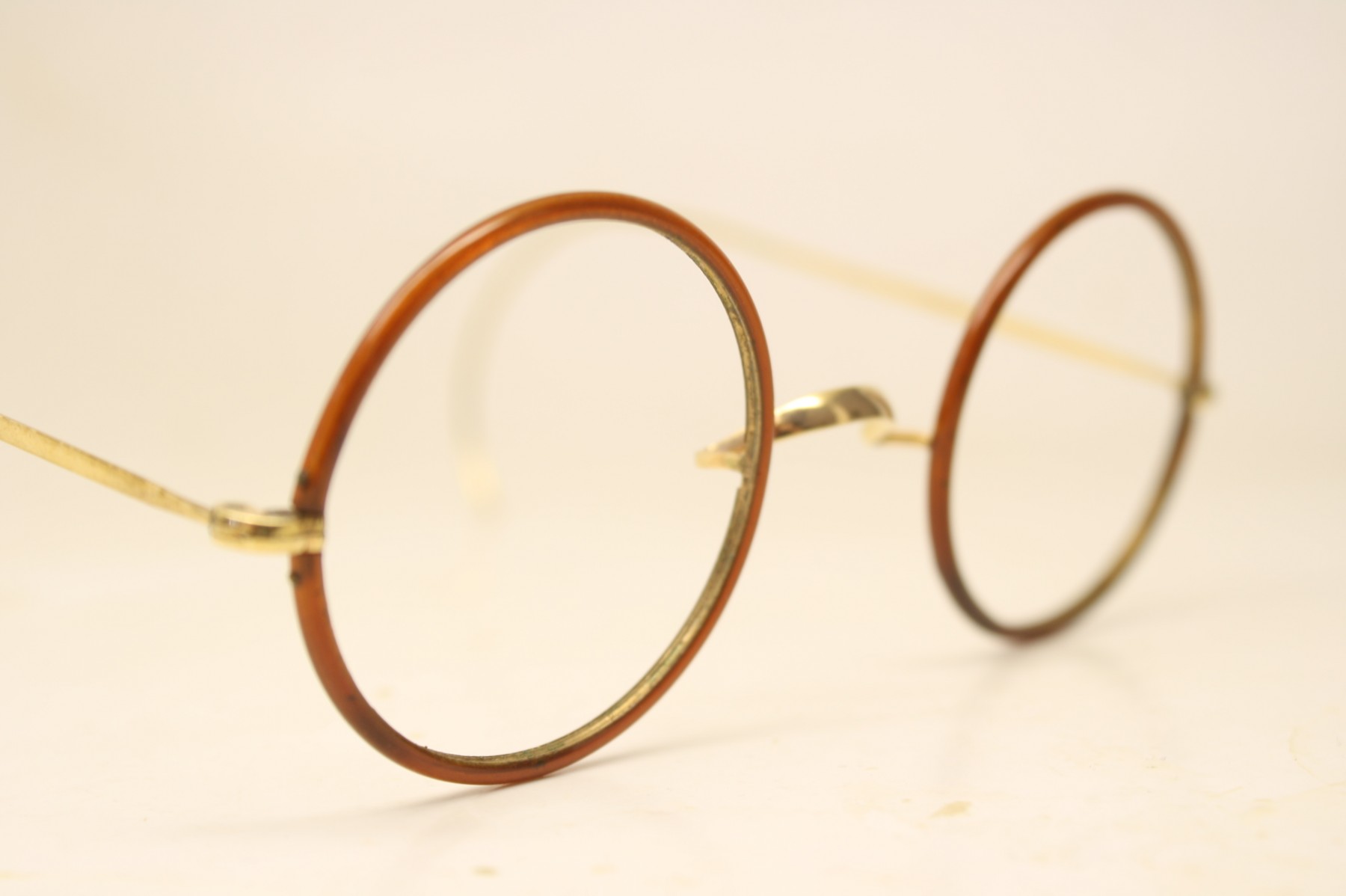
Some of the early American companies that brought on a new era of US Manufacturing wereBausch & Lomb (B&L, today mostly popular for their contact lens solutions and other eyecare products, but not eyeglasses ), American Optical, Shuron and Titmus Optical. Today we would like to focus on American Optical
In 1826. William Beecher, A young man who apprenticed in Providence Rhode Island, came to Southbridge, Massachusetts to establish a jewelry and optical manufacturing shop. He believed that Americans could produce eyeglasses on par or even superior to Europe, and time would prove him correct.
The first antique eyeglasses he produced were silver spectacles which were followed by blue steel eyeglass frames. When he was done producing a batch of antique spectacles he would wrap them up and put them in his bag, and travel to Boston where a few opticians were located.
In the beginning he encountered a great deal of resistance. Eyeglass frames were, as today, cheaper to manufacture abroad and were sold at a lower price. While the economic causes and manufacturing regions were vastly different, the result was the same. It was only with great difficulty that he was able to sell a few dozen frames before returning to Southbridge.
Sales slowly started picking up. By 1850 his annual revenue from selling these antique spectacles was $9000.00, a great cause for celebration at the time. The company continued growing by leaps and bounds. The company went through various hands and had various investors throughout the years. In 1869, this was all incorporated into what became known as American Optical Company. At that point they already had 15,000 employees and assets of $1.5 to $2.0 billion!
American Optical later went into other opthalmic equipment, microscopes, safety equipment and other medical devices
By the 1900’s American Optical was producing 600,000 vintage eyeglass frames per year.Many 1/10 12k gold filled, gold or silver colored.
During world war 1 American Optical was very active in supplying eyeglasses for the soldiers and allied forces, supplying 2 and a half million frames throughout the war. They even had special models called “Victory” and “liberty” specifically made for WW1. See WWI era eyeglasses here).
During world war American Optical was very influential with over 10 Million eyeglasses and sunglasses in 1943 and 1944 Alone. (see WW2 Era eyeglasses here.
Many 1950’s and 1960’s cat eye glasses were made by american Optical. For more info on anything American Optical related check out this website.

What would be interesting to understand and is beyond our area of expertise is what causes these shifts? Why would people start buying American made eyeglasses at higher prices as opposed to European made frames? And if there is good reason for that why did that all change 30 years ago? For other products it is easy to explain how overseas manufacturing is cheaper. But imported antique eyeglasses were cheaper well before American manufacturing started, so how could the American market emerge to begin with?
Perhaps a deeper understanding of the history of vintage eyewear can help inform US policy today. Or as the famous saying goes: "The best way to predict the future is to look at the past".