Vintage Round Glasses
Overview of Vintage Round Glasses
One of the first shapes used for antique eyeglasses was round. Vintage round glasses stuck around for 200 years from their invention and then virtually disappeared, only to make a reappearance in the past couple of years mainly due to retro glasses culture and cheap foreign manufacturing.
Round glasses from the 19th century
In the early days of antique eyeglasses the round shape may have been due to a lack of technology or creativity, or for simplicity’s sake.
One of the precursors to 19th century Pince-Nez was a style known as Nuremberg spectacles, named after the city this early antique spectacles industry grew in. Nuremberg eyeglasses were often fully round glasses. Another type of early vintage round glasses were Martins Margins, invented by British optician Benjamin Martin. Many early 19th century eyeglasses were perfectly round as well.
Round Pince Nez Glasses
While most antique pince nez were oval in shape, there were quite a number of perfectly round vintage pince nez glasses. Some of these were rimless pince nez where the lenses could be made in any shape, but there are a number of regular vintage pince nez which were fully round, mostly spring bridge pince nez style.
Windsor vintage round glasses
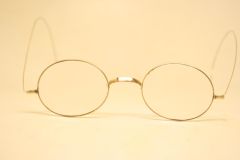
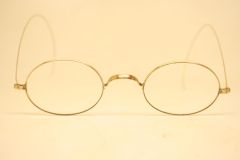
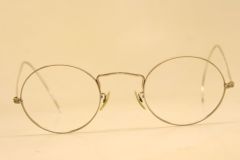
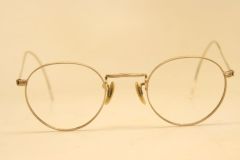
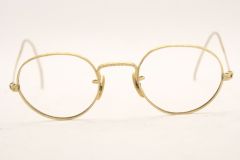
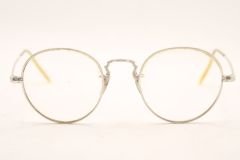
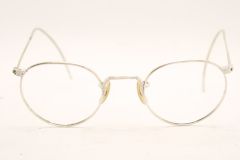
Windsor glasses is a style of antique eyeglasses first invented in Windsor, England. Common characteristics of Windsor glasses were fully round lenses, a saddle bridge instead of typical nose pads found in modern eyeglasses frames, and cable temples.
Windsor glasses were generally gold and silver colored. The material ranged from stainless steel to yellow gold filled frames. Sometimes they were covered with zyl or cellouid plastic, on the lens rims, nose bridge and sometimes temples of these round vintage glasses.
John Lennon’s glasses
Aannoher type vinttage round glasses is John Lennon Glasses. John Lennon can be seen in many photographs sporting vintage round glasses. He generally wore gold Windsor style round vintage glasses though sometimes wore other models such as marshwood glasses. There is some argument on the lens diameter of the round glasses John Lennon Wore. From the photos they appear to be quite small, 36 to 38 millimeters. 36mm was not such a common size but was not unheard of. Some say he wore 40mm frames though that is hard to argue looking at the photographs where they seem quite small.
Harold Lloyd glasses
Another style of peerfectly vintage round glasses is sometimes called Harold Lloyd glasses. They were generally made of Bakelite or tortoiseshell , black brown or tortoise in color. They were generally fully round between 37-40 millimeter in diameter though usually they were 40 millimeters.
Marshwood round vintage glasses
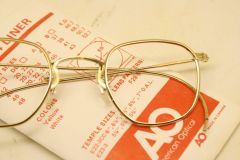
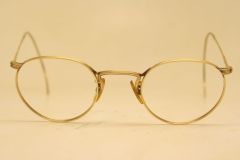
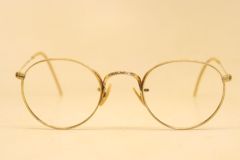
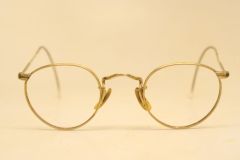
In the 1920s with the introduction of the nose pads as we know it to vintage frames there was a new possibility: fully round vintage glasses with nose pads. These frames were generally yellow or white gold filled and between 38 and 42 millimeters in size. As opposed to Windsor eyeglasses , these frames were often etched with beautiful , Art Deco designs which created a world of its own or complexity and style to these vintage round frames.
Round rimless glasses
Another popular type of round vintage glasses were antique rimless eyeglasses. Rimless eyeglasses are lighter on the face and the lens shape was not limited to the frame shape, it could be made any shape one wants. Round vintage glasses was and is a great choice for rimless vintage frames. Rimless frames can help curb the radical ness of fully round shape which can otherwise sometimes be a bit much for some faces. Without the rims they are much lighter and can look better on some people.
Many antique 1880s saddle bridge rimless glasses frames were round in shape. While the majority were oval, we do see many that were fully round vintage glasses. This can’t really be said about later 1930s and 1940s rimless eyeglasses. Most of hose were octagonal in shape, either fully so or sometimes 6 sided or the likes.
Lens diameter in vintage round frames
The lens diameter for round vintage glasses varied based on the century they were frames. One thing is clear: the lens diameter got larger and larger every decade that passed. If in the 1700s and 1800s one could find 32 or 34 millimeter round antique spectacles, by the time it came to the late 1800s eyeglasses lens diameters were already nearing the 38 to 40 millimeters on average.
A typical pair of Windsor eyeglasses for circa 1880/1920 usually had 40 millimeters fully round lenses. There was also 36, 38 or 42 but 38 and 40 were by far the most common. By the time we come to the 1940s we see 42mm becoming more of a thing and even approaching 44 millimeters. During the 1970s and 80s we see perfectly round vintage eyeglass frames lens diameter as large as 48, 50 and even larger. These often look out of proportions and goofy and should not be worn in that sisorder unless one is hoping to accomplish such a look or dress according to that era.
Round vintage glasses 1969-2000,
From the 1960’s to 2000 vintage round glasses were not really a thing, aside for some goofy looking large 1970s and 1980s wire rim eyeglasses.
Round eyeglasses today
After the year 2000 there has been somewhat of a resurgence for round vintage glasses. Inexpensive overseas manufacturing and the cutting out of the middleman and gatekeepers has enabled all these small companies to spring up and create designs in all shapes and colors. Some of these are too large, almost as if their designers did not study antique round frames but I come up with the new designs but rather churned them out of photoshop or their imagination. As a general rule of thumb we would not recommend any round eyeglasses with a diameter larger than 42mm. Some exception do apply l, this is just a general rule.