
The Vintage Optical Shop
Eyeglasses Through the Ages
Every frame we sell was made in its own time, by hand or by the factories of its day. Walk through two and a half centuries of eyewear, from coin silver spectacles to 1980s fades, and find the era that looks like you.
1750s – 1850s

Georgian & Early Victorian
The Age of the Spectacle Maker
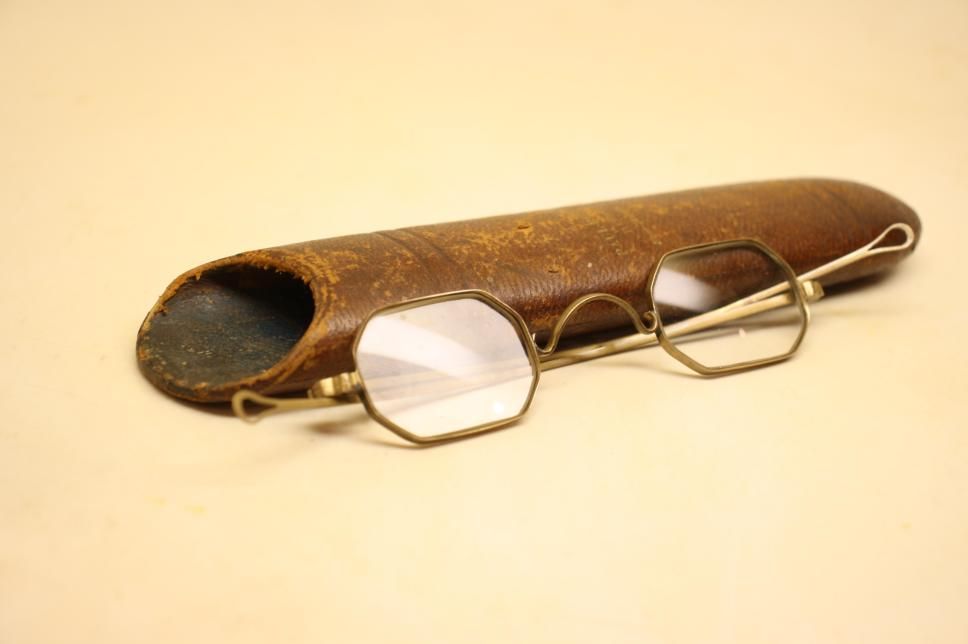
For centuries glasses were balanced on the nose or held in the hand. In the 1700s London opticians began adding side arms, and the idea stuck. Early temples were short and straight, often ending in a small loop, and many slid in and out to press gently against the head.
Frames were made by hand from coin silver, brass, steel and occasionally gold, with small oval or octagonal lenses. Turn-pin and sliding temples, double-lens sunglasses and hand-made cases are all hallmarks of the period, and each surviving pair is effectively one of a kind.
Shop 1750s–1880 frames1860s – 1880s
Civil War Era
Civil War & the Victorian Workshop
By the mid-1800s spectacles were being made in larger numbers in America and Europe. Octagonal and rectangular lenses joined the traditional ovals, and straight temples remained the norm. These are the frames reenactors and living historians search for today.
Frames still sat close to the face on a saddle bridge, so they ran narrow, usually around 4¼ to 4⅝ inches across. Original cases, often tin or leather, frequently survive alongside them.
Shop Civil War glasses1880s – 1910s

Gilded Age to Great War
Pince-Nez & Windsor Rims
This was the golden age of the pince-nez: armless lenses clipped to the nose by a spring or hard bridge, usually worn on a chain or cord. Oxford, spring bridge and hard bridge styles all flourished, and they became the look of bankers, scholars and statesmen.
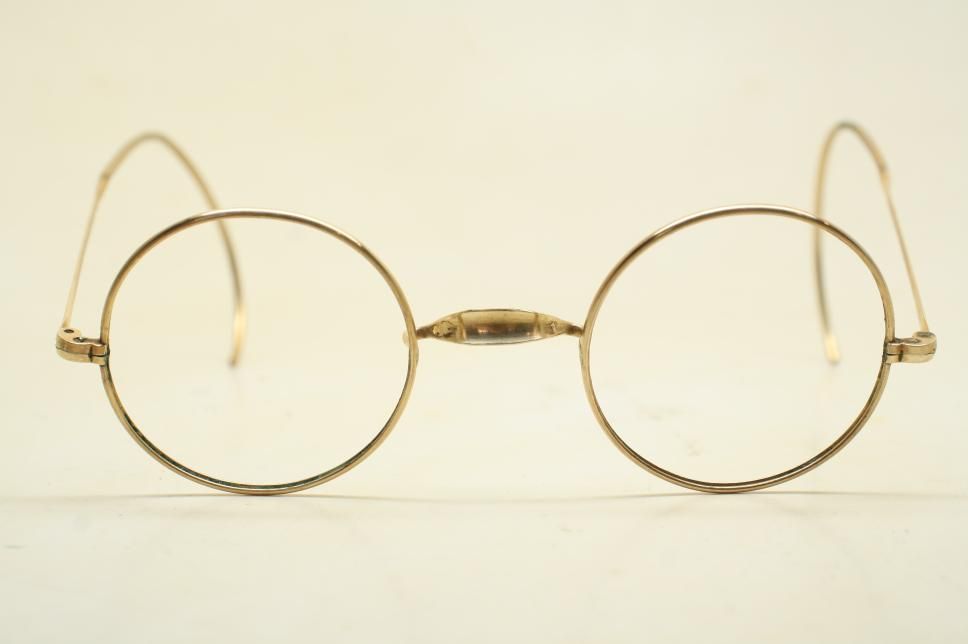
At the same time round Windsor rims, often wrapped in celluloid, and curly cable temples that hooked behind the ear made spectacles comfortable for all-day wear. Gold-filled metal became the standard, and rimless frames began to appear.
Shop 1880–1920 frames1920s

The Roaring Twenties
Rimless, Round & Engraved
Two looks defined the decade: big round frames in dark celluloid, made famous by silent-film comedians, and delicate rimless octagons in gold. Detachable nose pads arrived in this period, freeing frames from the saddle bridge and letting them grow wider.
New manufacturing made it affordable to etch and engrave temples and bridges. For the first time frames carried decorative patterns, and with them came a real split between men's and women's styles.
Shop 1920s–1940s frames1930s

Art Deco
Art Deco & the Ful-Vue Revolution
Ful-Vue frames moved the temples from the middle of the lens up to the top corner, opening up the wearer's side vision. The design gave rise to the P3 shape, softer than a circle and more practical, and still one of the most flattering vintage shapes.
Slim round frames in gold-filled metal, now riding on adjustable nose pads, came from American Optical, Bausch & Lomb, Shuron and Artcraft, each with its own signature bridge and engraving. Sunglasses also took off as a fashion accessory on the beaches of the decade.
Shop 1920s–1940s frames1940s
Wartime & After
Numont, Military Issue & Goggles
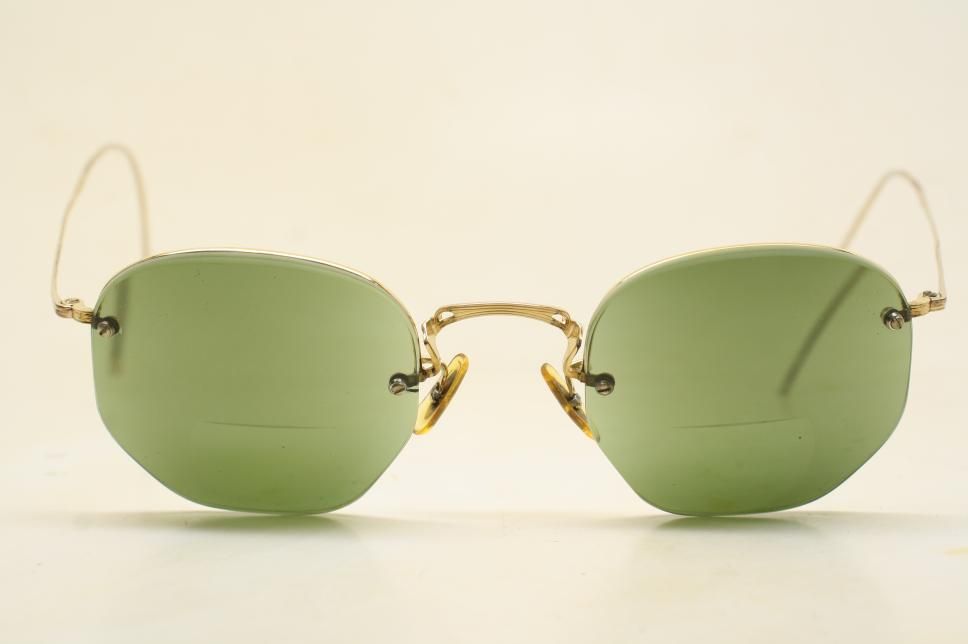
Semi-rimless Numont and Rimway mountings held the lens with a thin wire along the top, giving a rimless look with the strength of a frame. They are the clean, gold-wire glasses of 1940s office photos and today's period films.
War brought standard-issue P3 frames, protective goggles and industrial safety glasses by the hundreds of thousands. Many survived as unused stock and are some of the most authentic WWII pieces available.
Shop semi rimless1950s

The Fabulous Fifties
Plastic, Color & the Cat Eye
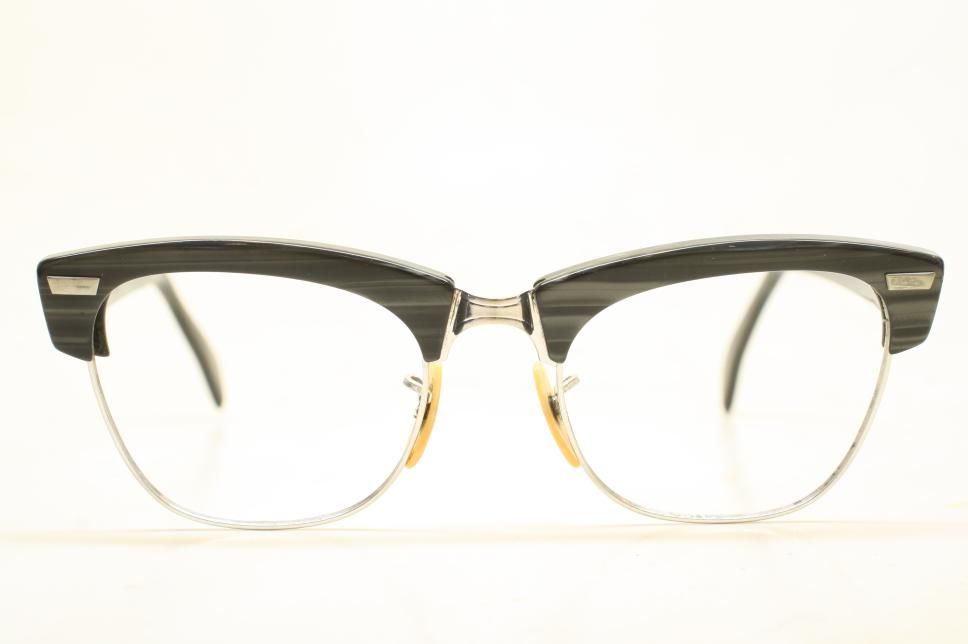
Plastic changed everything. Frames were no longer limited to gold and silver, and color arrived almost overnight. Women's frames swept up into the cat eye, often trimmed with rhinestones, while men chose between bold horn-rims and the browline, with its heavy top bar and metal lower rim.
Glasses stopped being purely medical and became part of an outfit, which is exactly why 1950s frames remain some of our most popular today.
Shop 1950s frames1960s
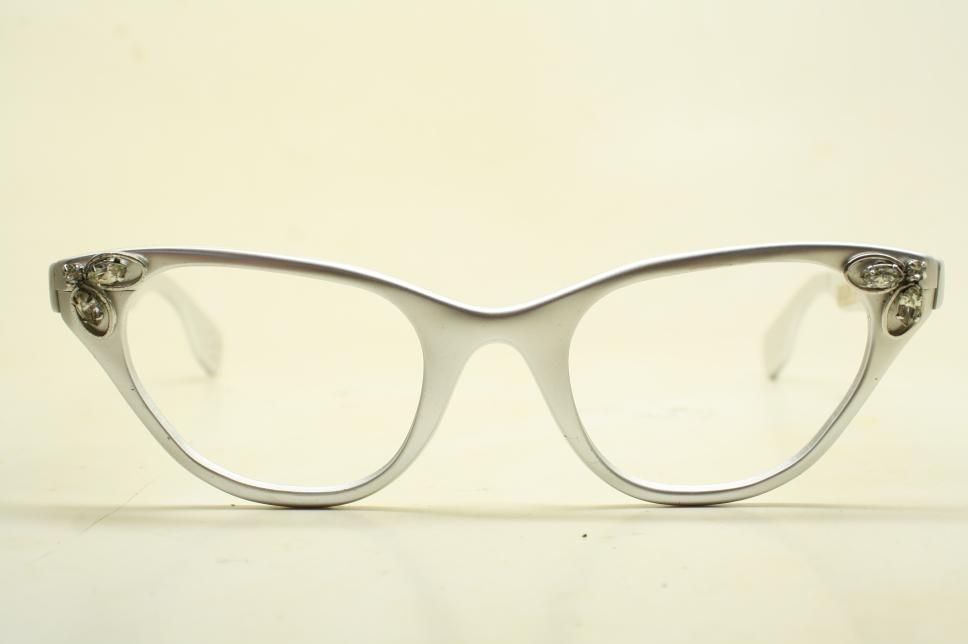
The Swinging Sixties
Jewels, Aluminum & Interchangeable Brows
The cat eye reached its peak: pointier, more jeweled and more colorful than ever. Tura's anodized aluminum frames and French “Frame France” designs pushed the style furthest, and American Optical sold frames with pop-off brows so one pair could match a whole wardrobe.
For the first time people bought plain-lens glasses purely for the look. Men's frames moved toward plastic horn-rims, the sharp-suited style now known as Mad Men glasses.
Shop 1960s frames1970s
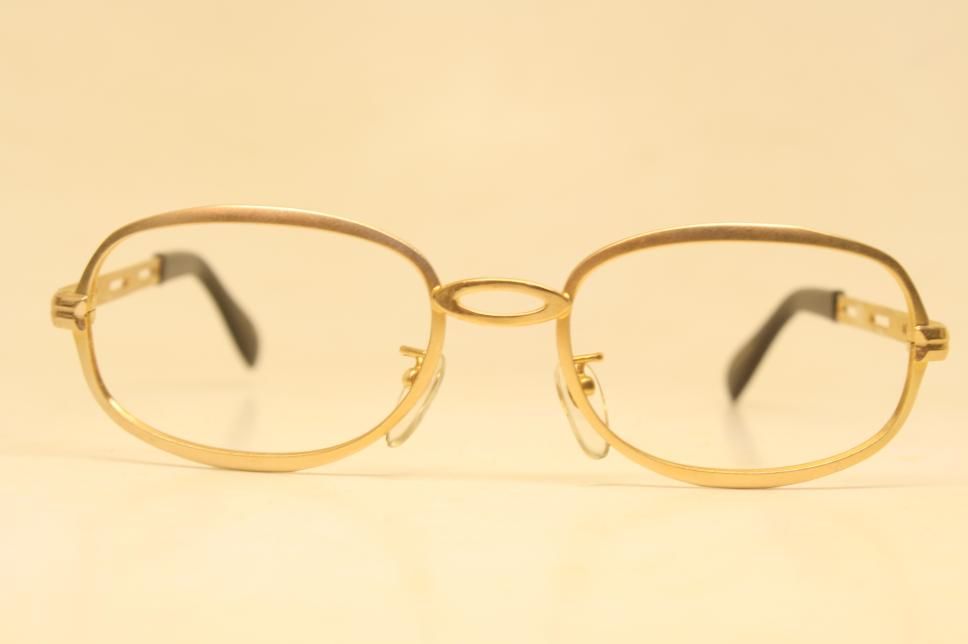
The Seventies
Oversized, Metal & Round Again
Lenses grew big, frames went thin and metal came back in gold and silver. Large squares and aviator-inspired shapes defined the mainstream, often with tinted or gradient lenses.
Counterculture revived the little round wire frame of the early 1900s, the look we now call John Lennon glasses, and brought century-old Windsor styles back onto the street.
Shop 1970s frames1980s

The Eighties
Big Lenses, Bold Fades
Everything got bigger. Wide plastic frames came in pinks, purples, blues and two-tone fades, while designer names began appearing on the temples. Glasses were unapologetically a statement.
Much of what we carry from this decade is unused new old stock, frames that sat in optical shop drawers for forty years.
Shop 1980s frames1990s

The Nineties
Small, Slim & Minimal
After the excess of the eighties, frames shrank. Narrow ovals and rectangles, thin wire and quieter colors took over, and rimless designs returned in a lighter, modern form.
These frames bring the story full circle, and they are already becoming the vintage of tomorrow.
Shop 1990s framesWear a Piece of History
Every frame in our shop is genuine, never a reproduction, and we can fit your prescription into nearly any of them. Find your era, check the size guide, and we'll handle the lenses.